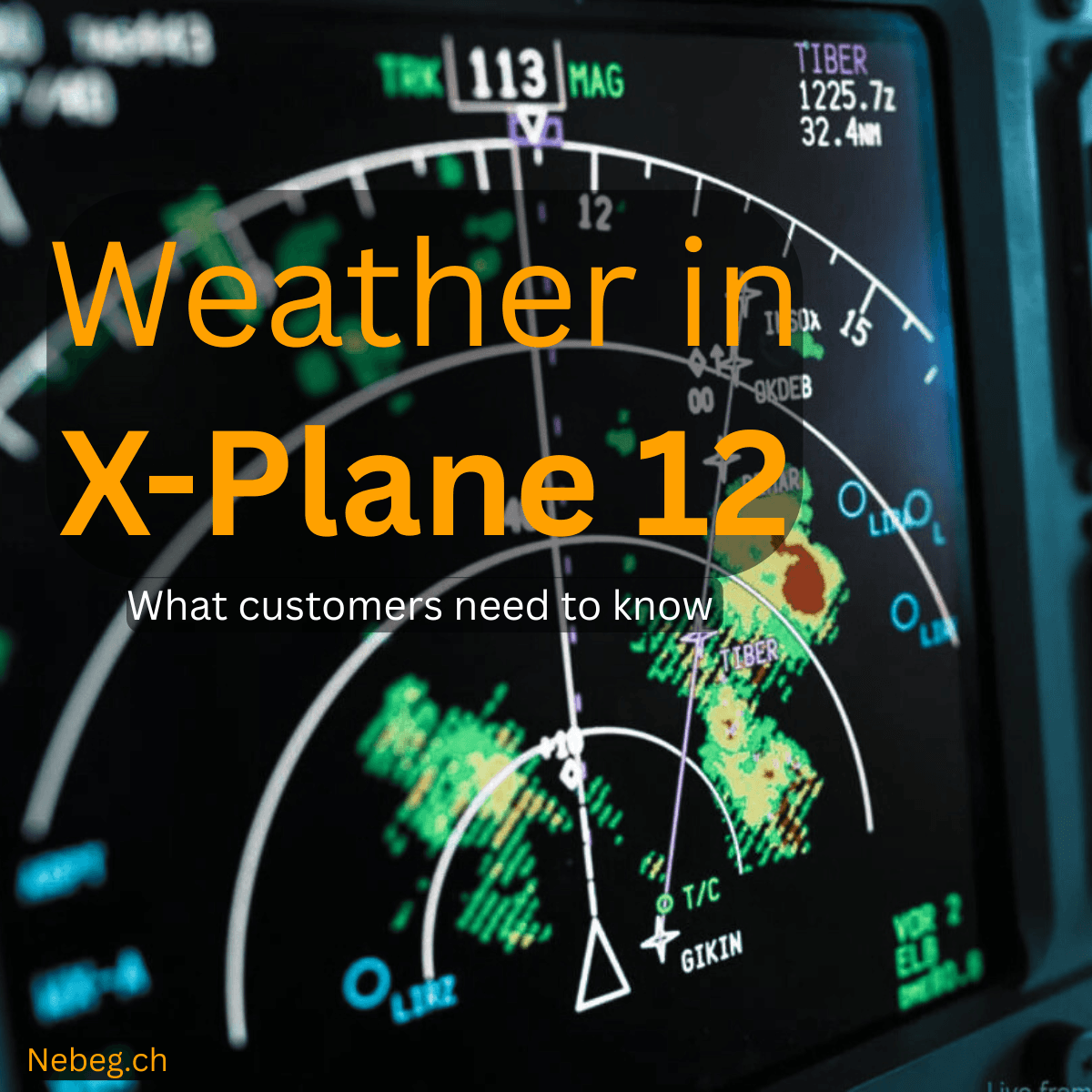
Weather in X-Plane 12: What Customers Need to Know
Weather simulation is a critical component in flight training and FSTD environments. This article explores the weather engine in X-Plane 12, its strengths and limitations.

Weather simulation is a critical component in flight training and FSTD environments. This article explores the weather engine in X-Plane 12, its strengths and limitations.
Weather simulation is a critical component in flight training and FSTD environments. As a developer of simulation tools and training devices, NEBEG Solutions recognises that fidelity in meteorology, cloud formation, turbulence, and real-world weather injection is no longer "nice-to-have" — it's fundamental to credible pilot training. This article explores the weather engine in X-Plane 12, its underlying mechanisms, its strengths and limitations, and how training organisations should evaluate its readiness for use in FSTD (such as FNPT II MCC or FTD) contexts.
At NEBEG Solutions, we see weather simulation as more than visual realism — it's an important element of both training quality and certification consistency.
As we develop advanced devices (FNPT II MCC, FTD, and custom FSTDs) and provide certification automation through the NEBEG eQTG Tool, we encourage training organisations and simulator manufacturers to use X-Plane 12's weather engine strategically:
Ultimately, weather fidelity can be a differentiator. Training centres that integrate realistic, data-driven weather scenarios demonstrate technical maturity and a strong commitment to authentic pilot training.
Weather simulation in X-Plane 12 represents a substantial leap forward in fidelity, realism and training applicability. For training organisations and FSTD providers, the system offers strong capabilities — but as with all simulation systems, careful evaluation against training objectives and regulatory requirements remains essential. At NEBEG Solutions, we are ready to support the integration of this weather engine into certified FSTD devices, assist with QTG mapping, and help training providers maximise the pedagogic value of weather-driven scenarios.